Greece is strengthening its position on the global map – Average wedding cost reaches up to €160,000
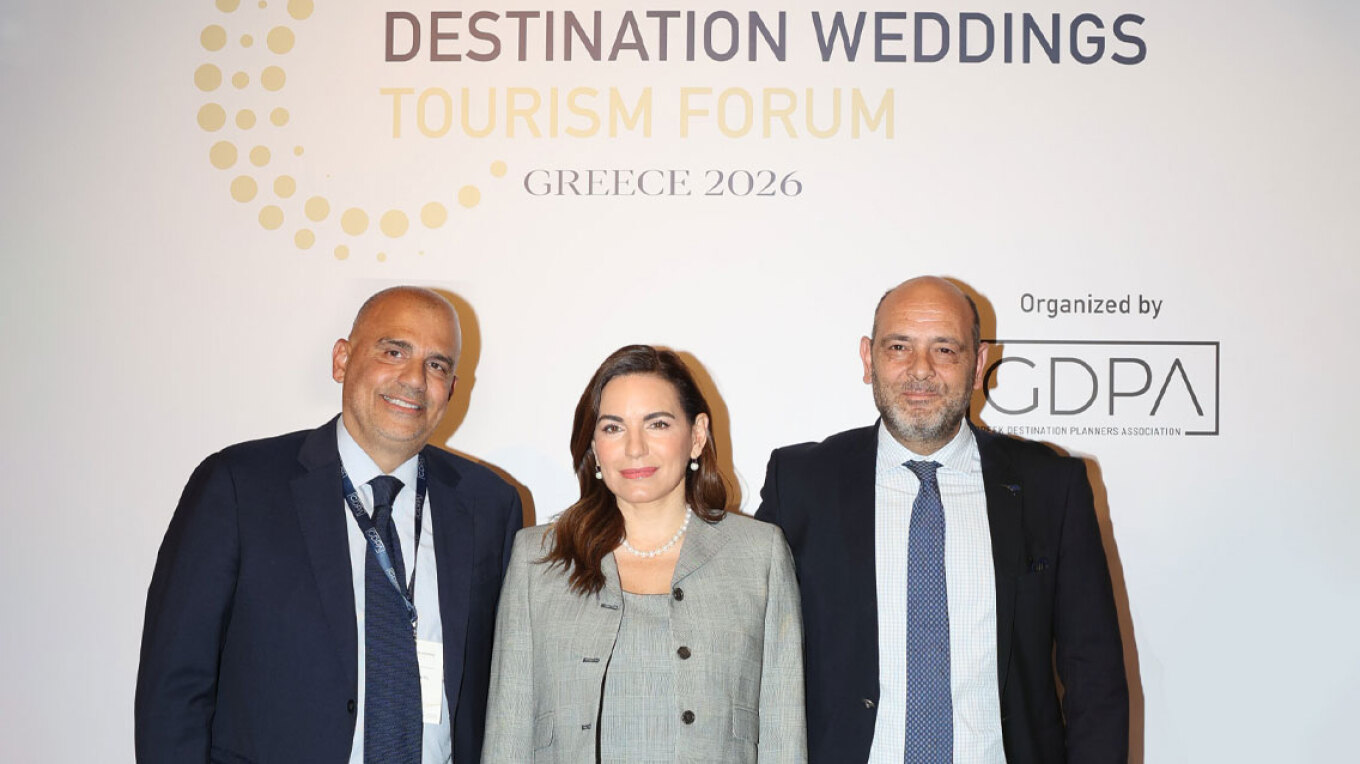
With international participation and the presence of institutional representatives, leading industry professionals, and opinion leaders, the Destination Weddings Tourism Forum – Greece 2026 took place, highlighting Greece’s potential as a top destination for destination weddings. Opening remarks were delivered by the Minister of Tourism, Ms. Olga Kefalogianni, and the Deputy Minister of Culture, Mr. Iasonas Fotilas.
Ms. Kefalogianni emphasized that wedding tourism is a journey with deep personal meaning, as two people choose a place to connect with one of the most important days of their lives. At the same time, it mobilizes many professionals and creates direct value for local communities, while typically involving longer stays, higher spending, and a more meaningful connection between visitors and the destination. Meanwhile, Mr. Fotilas focused on Greece’s advantages, noting that the country offers history, memory, and tradition that create a unique setting accompanying visitors for a lifetime. He also highlighted that the Ministry of Culture acts as the guardian of Greece’s cultural wealth, continuously working to protect and promote it.
A key highlight of the conference was the presentation of the study “Saying Yes to Greece – Destination Weddings in Greece: Mapping the Market” by Focus Bari, presented by its founder, Ms. Xenia Kourtoglou, offering for the first time a comprehensive picture and outlook of the sector.
The main findings show that the average budget per destination wedding amounts to €160,000 (excluding VAT), with each wedding involving around 130 guests and 4 overnight stays, significantly boosting overall tourism spending. The total annual economic contribution can reach up to €2.5 billion. At the same time, 77% of weddings managed by wedding planners involve couples from abroad, with key markets being the USA, the United Kingdom, Australia, and Israel, while emerging markets such as India and Middle Eastern countries are also gaining traction.
Regarding India, the presentation by Pramod Lunawat, CEO of Millenium Event & Marriageuana, highlighted that Indian destination weddings can reach budgets of €1 million for a three-day event with 300 guests, generating significant local economic activity.
As for new trends in wedding tourism, there is a shift toward multi-day weddings, with an emphasis on authentic local experiences, personalized planning, high-end gastronomy, and pre- and post-wedding activities.
Finally, strengthening Greece’s international promotion as a wedding destination—along with improved access to historical sites and monuments, the development and upgrading of venues and infrastructure, the promotion of new destinations beyond already popular ones, and a strong digital presence through online channels—are key requests from the sector for further growth.
Investment in promotional campaigns is considered essential, as destination choice is strongly influenced by the digital environment and wedding content shared on social media by guests and couples, according to Alina Kupernina, co-founder of the international wedding media platform WedVibes, who highlighted the decisive role of social media in shaping modern trends and destination choices during her speech.
Destination weddings are therefore evolving into comprehensive travel products, contributing to the extension of the tourism season and boosting tourism across more regions of the country.
The conference was opened by the President of GDPA, Mr. Thomas Politis, who underlined the critical importance of wedding tourism for the Greek economy and the need for a coordinated national strategy to establish Greece as a leading player on the global wedding tourism map. He particularly emphasized the significant efforts made over the years by GDPA members to bring Greece to its current position, as well as the need for targeted collective action.
“Wedding tourism is not just an emerging form of tourism, but a strategic pillar of development with high added value for the Greek economy. Greece has all the comparative advantages to lead internationally. What is required is targeted international promotion, improved infrastructure, and institutional cooperation between the public and private sectors,” he stated at the end of his speech.
The conference was held under the auspices of the Greek National Tourism Organization (GNTO) and SETE.